
Warning: This article contains complete spoilers for the ending of Attack on Titan. If you have not finished the series, please stop reading now. Come back when you have.
I need to tell you where I was when the final episode aired. I was in my room at 2am, laptop screen bright in the dark. I had cleared my entire schedule for that weekend to watch the final season. When the credits rolled on the last episode, I sat completely still for about ten minutes. Then I opened my phone and saw my entire feed arguing about it.
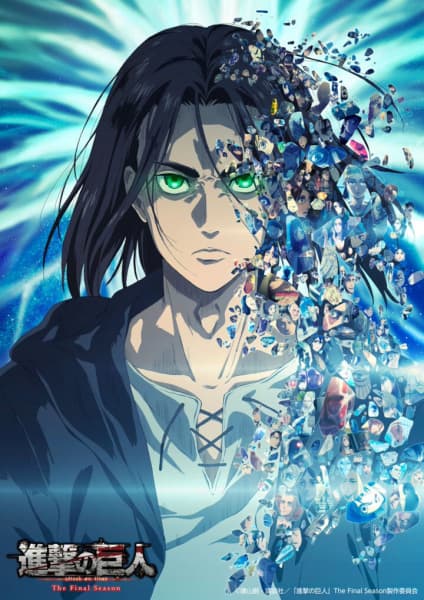
The ending of Attack on Titan is one of the most divisive conclusions to a major anime series in history. Three years later, people are still arguing about it. Here is my honest breakdown of what happened and what I think it means.
The Setup: What is the Rumbling?
By the final arc, the world's political situation has become impossibly complicated. Paradis Island — home to the Eldians, the people who can become Titans — faces total destruction from the outside world. Every nation on Earth has united against them.
Eren Yeager, the protagonist we have followed for four seasons, has a plan. Using his power as the Founding Titan, he can activate the millions of Wall Titans — colossal skeletal giants — and march them across the entire world. The Rumbling.
The goal: kill 80% of the world's population before they can kill the Eldians.
This is the plan our protagonist has chosen.
Why Did Eren Do This?
This is the question that drove the fandom apart and I have thought about it more than I want to admit.
The surface answer is that Eren saw the future using the Attack Titan's ability to see future memories. He saw that the Rumbling was inevitable. He decided to be the one to carry it out so that his friends — particularly Mikasa, Armin, and the surviving Survey Corps — would be the ones to stop him. By defeating him, they would become heroes to the remaining world and protect Paradis from further retaliation.
In other words: Eren became a monster on purpose so that his friends would not have to be.
The deeper answer is more painful. Eren loved freedom above all else. He could not accept a world where his people lived in fear. He could not find another path. And I think — though the manga leaves this somewhat ambiguous — part of him had genuinely given up on finding one.
There is a moment in the final arc where Eren tells Armin that he does not know why he did what he did. He just wanted to. That line haunts me. It suggests that beneath all the strategic justification, there is just a boy who was angry and hurt and could not stop himself. Which is possibly the most human thing about him.
The Alliance Stops the Rumbling
Mikasa, Armin, and the surviving members of both the Paradis Survey Corps and the Marleyan Warriors form an alliance to stop the Rumbling. Former enemies fighting together against a common horror.
The final battle is extraordinary to watch — aerial combat against Titans, Armin transforming into the Colossal Titan in the middle of the ocean, Levi fighting despite his injuries.
In the end, it is Mikasa who kills Eren. She flies into the mouth of the Founding Titan, finds Eren's real body inside, holds his severed head, and kisses him goodbye. It is genuinely one of the most emotionally complicated scenes in the entire series. The person who loved Eren most in the world is the one who ends him.
The Aftermath
After Eren's death, all Titans disappear. Pure Titans around the world revert to the humans they originally were. The Titan power is gone from the world.
The cost: 80% of the world's population is dead. The Rumbling succeeded before it was stopped. Paradis is safe for now — but the surviving nations will eventually regroup.
Armin negotiates as a representative of Paradis. He uses his status as the person who helped stop the Rumbling to begin peace talks.
Mikasa takes Eren's head and buries it under the tree he loved. She eventually leaves Paradis and lives among the Hizuru people. We see her die of old age, surrounded by grandchildren, beside Eren's grave.
The final panel of the manga shows Paradis Island years — possibly centuries — later. It has been bombed. Children emerge from the rubble into a new world. The cycle of violence continues.
Was the Ending Good?
I have changed my answer to this question several times.
Immediately after watching it, I was frustrated. It felt rushed. I wanted more resolution. I wanted Paradis to survive. I wanted Eren's sacrifice to mean more.
After a year of thinking about it, I believe the ending is correct. Attack on Titan was never a story with a happy ending available to it. It was a story about cycles — of hatred, of violence, of one group brutalizing another. The final shot of the ruins of Paradis with children emerging into sunlight suggests that no single act, no matter how massive, breaks the cycle. It just changes who suffers next.
That is a devastating and honest conclusion. It is not the ending I wanted. It might be the ending the story deserved.
Whether you agree or disagree with it, Attack on Titan remains one of the most ambitious anime ever made. And the ending, whatever its flaws, commits to its ideas all the way to the last frame.