
People sometimes ask me when I explain that I run an anime website: "But what actually is anime? Where did it come from?" It is a fair question. Most people consume anime without thinking much about how this art form — which is now a multi-billion dollar global industry — actually developed over the course of a century.
I find the history of anime genuinely interesting, partly because it is a story about how art gets exported and transformed, and partly because it helps you understand why the medium looks and feels the way it does.
What Does "Anime" Mean?
Let me start with the word itself. In Japanese, anime (アニメ) is simply a shorthand for animation — any animation, from any country. When Japanese people say anime, they might mean Toy Story or Spirited Away indiscriminately. The distinction between Japanese and non-Japanese animation does not exist in the word itself.
Outside Japan, anime has come to specifically mean animation produced in Japan or in a distinctly Japanese visual style. This is how the word is used everywhere else in the world, and how I use it on this site.
The word comes from the English "animation" — borrowed into Japanese, shortened, and eventually re-exported back to English as a loan word meaning specifically Japanese animation. Languages are strange.
The Very Beginning: 1917
The history of Japanese animation begins earlier than most people expect — 1917, just a few years after animation as a medium was invented in the West.
The first publicly released Japanese animated film was Namakura Gatana (Blunt Sword), a two-minute comedy about a samurai who cannot use his sword. It was made by Jun'ichi Kouchi, one of three animators working simultaneously in Japan in the late 1910s who are now considered the fathers of Japanese animation. The other two were Seitaro Kitayama and Oten Shimokawa.
These early animations were inspired by Western imports — American and French films that were reaching Japanese audiences at the time. Japanese animators looked at what they saw and figured out how to do it themselves. This pattern — Japan encountering something from outside, absorbing it, and producing a distinctly Japanese version — would repeat throughout the medium's history.
Wartime Propaganda: 1930s-1940s
During Japan's militarist period and World War II, animation was heavily used for government propaganda. The first feature-length anime film, Momotaro: Umi no Shinpei (Momotaro: Sacred Sailors, 1945), was a 74-minute military propaganda piece about animal soldiers following the divine mission of the legendary hero Momotaro.
This history is uncomfortable but important. The medium developed partly in the service of military nationalism. The postwar reinvention of anime as entertainment — and eventually as one of Japan's most significant cultural exports — represents a genuine transformation.
Osamu Tezuka and the Birth of Modern Anime: 1950s-1960s
If there is one name you need to know in the history of anime, it is Osamu Tezuka (1928-1989). Called the "God of Manga and Anime," Tezuka essentially invented the visual language that defines anime to this day.
Tezuka's innovations came from an unusual source: Disney. He was enormously influenced by American animation — particularly the large, expressive eyes that Disney used on characters like Bambi. He adapted this to his own work, creating the large-eyed aesthetic that became anime's most recognizable visual signature worldwide.
His 1963 television adaptation of his manga Tetsuwan Atom — known in English as Astro Boy — was the first successful anime television series. It ran for 193 episodes and established the economic model that defined Japanese animation for decades: studios producing serialized adaptations of popular manga for television audiences.
Tezuka was also extraordinarily prolific as a manga creator. His work covered science fiction, historical drama, medical ethics, religion, and sexuality. He treated comics and animation as a medium capable of serious artistic and intellectual work — a perspective that influenced every creator who came after him.
The 1970s-1980s: Genre Foundations
The 1970s and 80s saw anime diversify dramatically and many of the genre foundations that still define the medium were laid down in this period.
Mecha anime — stories featuring giant piloted robots — became enormously popular. Mobile Suit Gundam (1979) is the defining example. Creator Yoshiyuki Tomino took the robot genre, which had been primarily children's entertainment, and made it into complex military science fiction. Gundam's conflict between the Earth Federation and the Zeon space colonies was morally ambiguous in ways that were unprecedented for the genre. The Universal Century timeline continues to produce new entries today.
Dragon Ball (1986), based on Akira Toriyama's manga, began the tradition of martial arts escalation that would define shonen anime for the next four decades. Goku's story from child to legendary warrior created a template — training arcs, power levels, tournament arcs — that is still influential.
Studio Ghibli was founded in 1985 by Hayao Miyazaki and Isao Takahata. Their first film, Castle in the Sky (1986), was immediately successful. The studio would go on to produce what I consider the greatest body of animated film work in history.
The 1980s also saw anime's first serious international expansion. Robotech, an edited compilation of three unrelated mecha series, introduced American audiences to serialized anime storytelling in 1985. Akira (1988) reached Western cinemas and demonstrated that anime could be a serious cinematic experience.
The 1990s: The Golden Age
I consider the 1990s the golden age of anime, though this is a personal view that reasonable people disagree with.
Neon Genesis Evangelion (1995) is the decade's defining work. Creator Hideaki Anno was suffering from severe depression during its production and used the mecha anime framework to explore psychological themes that television animation had never touched. Episodes 25 and 26 abandon conventional animation entirely in favor of psychological stream-of-consciousness. The theatrical film End of Evangelion (1997) provides an external completion of the same story that is as overwhelming as anything I have seen in cinema.
Dragon Ball Z (1989-1996) reached television audiences worldwide and introduced millions of children, including me, to anime. The power escalation arcs, the transformation sequences, the screaming-for-20-episodes-before-fighting style — these became stereotypes of the medium, fairly and unfairly.
Sailor Moon (1992) proved that anime could center female protagonists with genuine heroism and achieve massive mainstream success. Its influence on magical girl anime and on female-led action storytelling extends decades forward.
Pokemon (1997) became something beyond anime — one of the most valuable entertainment franchises in human history. The cartoon was the gateway for an entire generation of Western children who then grew up to discover the broader medium.
The 2000s: Global Internet Age
The internet transformed anime from a Japanese product distributed internationally through licensing negotiations into something that global audiences could access immediately. Fan subtitling groups — fansubs — were translating new episodes and distributing them online within days of Japanese broadcast.
Naruto (2002) and One Piece (1999) became the defining long-running shonen series of the decade, building massive international followings. Fullmetal Alchemist: Brotherhood (2009) set a new benchmark for what anime storytelling could achieve.
Legal streaming services began emerging toward the end of the decade. Crunchyroll launched as a streaming platform in 2009. The legal infrastructure for international anime distribution was beginning to take shape.
The 2010s and Beyond: Mainstream Global Culture
Attack on Titan (2013) was the moment anime became undeniably mainstream internationally. It was discussed in newspapers that had never covered anime before. It was watched by people who had never watched anime before. It proved that dark, complex, morally serious anime could achieve genuine crossover success.
Sword Art Online (2012) sparked an isekai explosion that still dominates seasonal anime production.
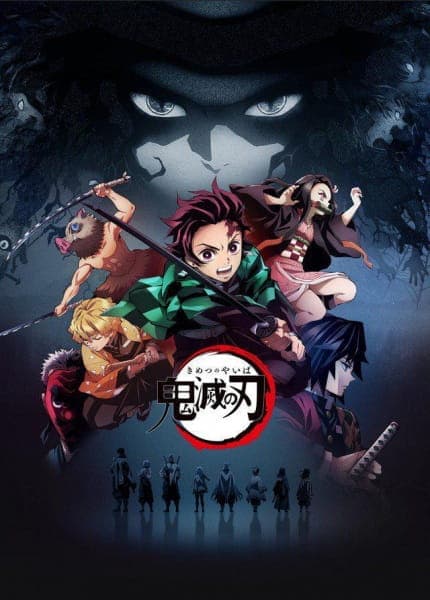
Demon Slayer (2019) shattered box office records worldwide. Its Mugen Train film grossed more than any anime film in history.
Netflix, Amazon, Crunchyroll, and Disney+ all began significant investment in anime licensing and production. The medium's economics shifted — international audiences were now generating revenue that mattered to production decisions.
Today, anime is a multi-billion dollar global industry producing more content than at any point in its history. It has traveled from two-minute comedies in 1917 to one of the most commercially significant entertainment mediums on Earth. That journey — from wartime propaganda to children's television to prestige global entertainment — is one of the stranger and more interesting stories in the history of art.